Enough: Reflections from Design Biz Retreat 2026, Costa Mesa, California
Visibility, Impact and the Question of Enough
Reflections from Design Biz Retreat 2026, Costa Mesa, California
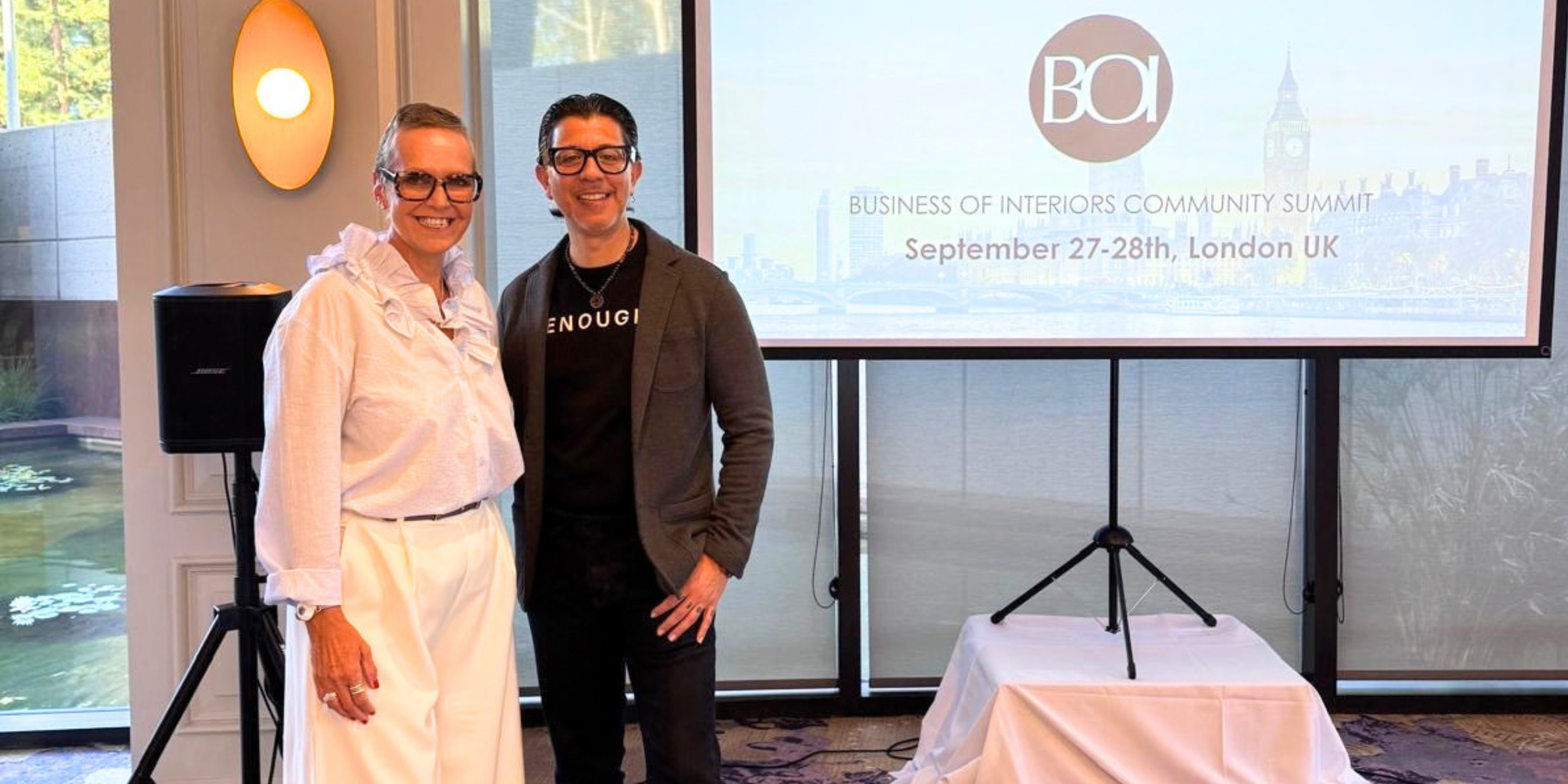
There is a cost to running a business. But that cost should never be you. I’ve just spent two days in Costa Mesa, California, at Design Biz Retreat, hosted by Rick Campos.
The overarching theme was Visibility and Impact. Two words that, in the world of interior design, we tend to associate with being seen. Being recognised. Getting published. Winning the next project. Building a brand that people know, remember and want to work with.
But I came away thinking about visibility rather differently. Not just how visible we are to potential clients, but how visible we are to the people who matter in our lives. Our families, our friends, our colleagues, and perhaps most importantly, ourselves.
Because somewhere in our relentless pursuit of building successful businesses, I wonder whether we’ve lost sight of what we’re actually building them for.
When is enough, enough?
Rick opened the retreat by introducing something that sat beneath the entire programme: mental health. He spoke about We Are Enough, a campaign connected with the former founder of TOMS Shoes, and the importance of challenging the belief that our worth is determined by what we achieve. It was an interesting place to begin a business retreat.
We’re so accustomed to being encouraged to do more. Grow more. Earn more. Become more visible. Have greater impact. And yet, how often do we stop and ask ourselves whether what we already have, what we’ve already achieved, might actually be enough?
Not because ambition is wrong. I have plenty of it. But because ambition without an understanding of what matters can become an extraordinarily expensive pursuit. And I don’t necessarily mean financially.
Behind the pretty pictures:
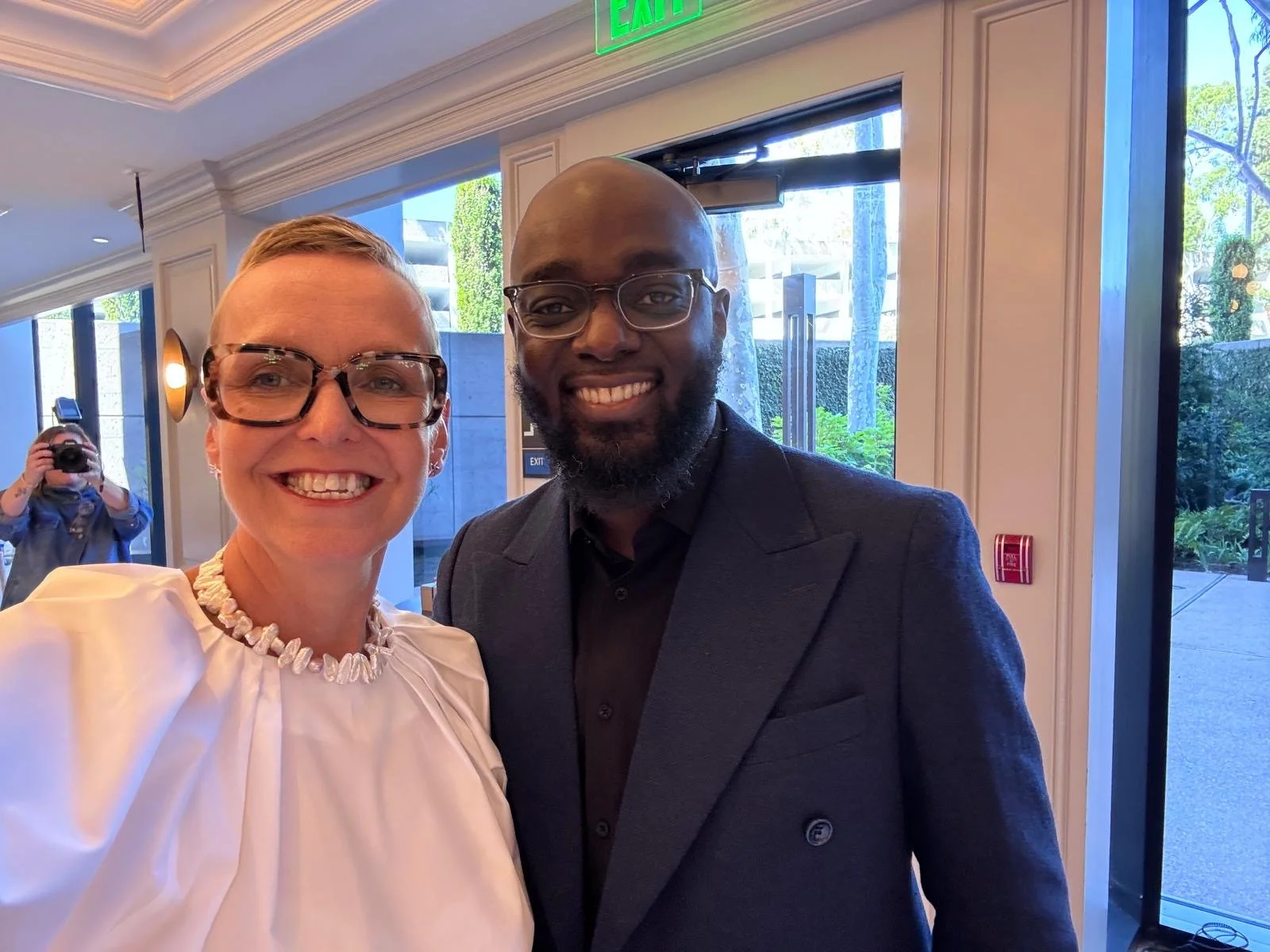
Our first speaker was Jude Charles, presenting Roadmap to Impact. Jude has a remarkable ability to get beneath the surface of what people do and find the human story behind it. He spoke about being relentless in understanding who you are, why you do what you do, and the importance of showing up for yourself as much as you show up for others.
I’ve watched Jude capture the hearts and minds of so many interior designers through his work. He understands something fundamental about our industry. Behind every beautiful photograph is a person. A person with a history, a set of beliefs, insecurities, ambitions, experiences and reasons for doing what they do.
And the more we understand those things about ourselves, the more meaningful our businesses can become. It’s something I feel strongly about. Our work is not simply a collection of beautiful rooms. It’s the result of human beings creating something for other human beings. Which makes the human story rather important.
Being visible in a world that’s changing:
Robyn White’s presentation on designing websites for AI and the changing search landscape was one of the most thought-provoking sessions of the retreat. Because visibility itself is changing. For years, we’ve understood digital visibility through websites, search engines, social media and the increasingly complicated business of persuading algorithms that we deserve to be seen.
Now AI is changing how people discover businesses, assess expertise and decide who they might want to work with. That’s a significant shift. But what I found most interesting was the apparent contradiction.As technology becomes more sophisticated, the things that distinguish us as human beings may become more valuable.
Our opinions. Our experience. Our ability to think critically, to empathise, to understand people and to communicate something meaningful. I don’t believe the answer is to resist AI, nor to surrender our voices to it. I think the opportunity lies somewhere between the two.
Understanding how technology can make us more discoverable, whilst ensuring that what people discover is unmistakably human. And that requires knowing what you stand for in the first place.
How much of ourselves should we show?
Ava Vienneau and Brittany Bowen of Girls at Flourish continued the visibility conversation with A Picture Is Worth a Thousand Words. Their session raised some interesting questions about personal branding and the images we choose to put into the world. Interior design is an incredibly visual profession. We spend our working lives curating spaces, balancing compositions and making decisions about what belongs and what doesn’t.
Perhaps it’s inevitable that we approach our own brands in much the same way. But there is a difference between presenting your work beautifully and presenting a version of yourself so carefully curated that nobody really knows who you are. I’ve thought about this a great deal in my own business.
I believe people should be able to understand something about the person behind the work. What matters to them. How they think. What they believe. But I don’t think that requires us to surrender every corner of our personal lives to the internet. There should be room for boundaries.
You can be open without being exposed. Personal without making everything public. Visible without becoming a performance.And perhaps that’s another version of enough. Knowing how much of yourself you want to share, and being comfortable with that decision.
The most valuable thing in the room:
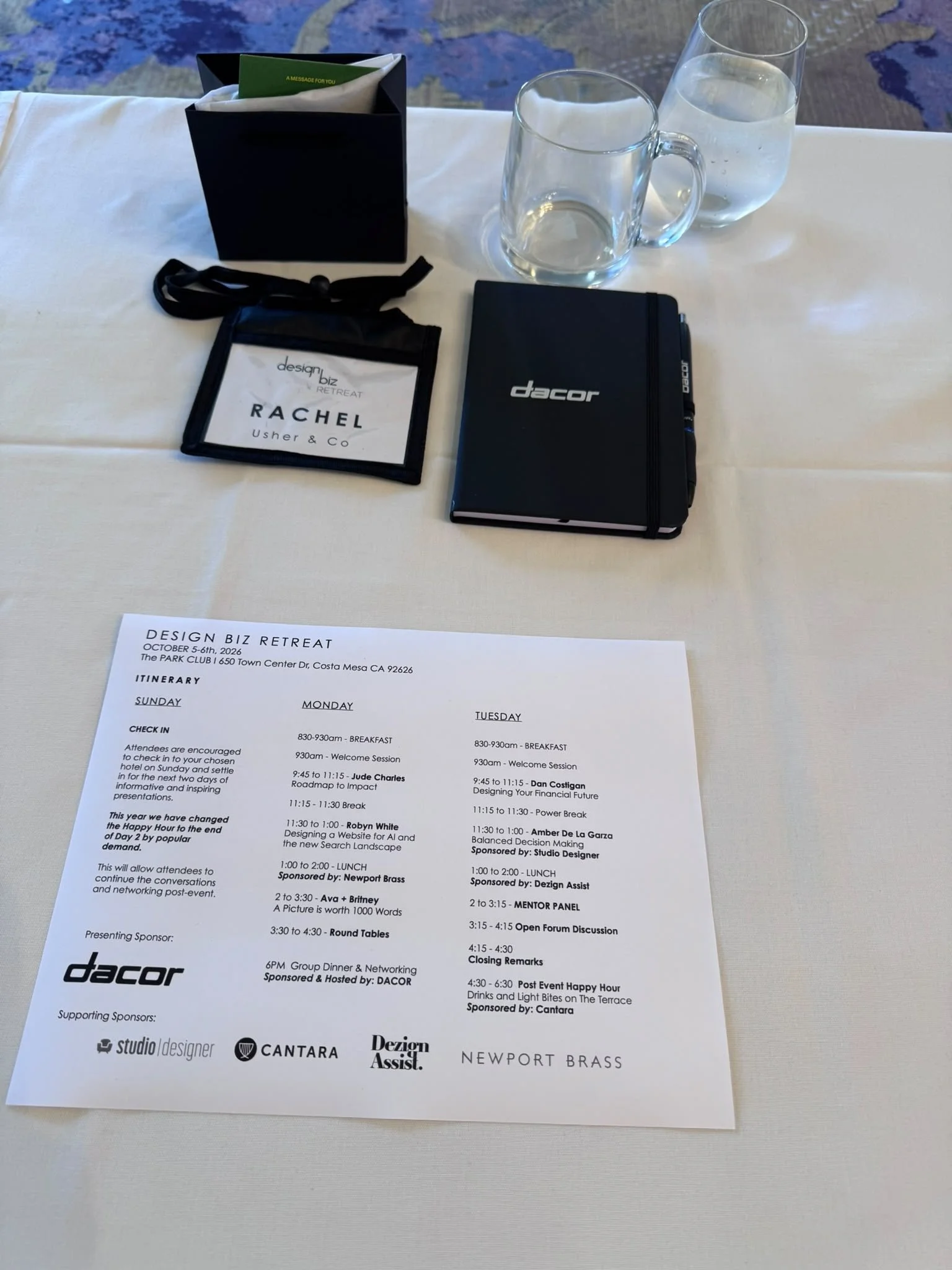
Between the presentations, we had roundtable discussions with other designers. And these were some of my favourite moments. Because the interior design industry can be an awfully lonely place. From the outside, it can look rather wonderful. Beautiful homes, lovely fabrics, exciting projects and glamorous photographs. Behind the scenes, there are people carrying enormous responsibility.
Responsibility for their clients’ money, their employees’ livelihoods, their reputations, their profitability, and the thousand decisions that need making every day. Sometimes they’re carrying all of that almost entirely alone. What struck me in Costa Mesa was how willing people were to share.
To talk about what wasn’t working. To admit what they didn’t know. To ask questions without worrying that they might look less successful because of them. To be vulnerable. And, quite simply, to make friends. There was an extraordinary kindness in that room.
It’s something I’ve always believed in, and one of the reasons I established The Business of Interiors in the UK. We need places where the people running creative businesses can put down the armour for a while. Where we can be honest about the difficult bits, celebrate the good bits, and recognise that we’re not the only ones trying to work it all out.
Rick has created something special in California. Not simply an event where people come to learn, but an environment in which people feel comfortable enough to connect. And I think that matters enormously. Our first day ended with a wonderful gathering hosted by Dacor, where beautiful food was prepared for us in the showroom.
But what I remember most isn’t the food or the setting. It’s sitting with people and talking about their lives. Not their portfolios. Not their follower counts. Their lives. There is something rather lovely about that.
Building a financial future, not just a busy business:
Day two brought us to a subject that I believe deserves far more attention in our industry. Money.
Dan Costigan’s session, Designing Your Financial Future, explored financial planning, pensions, investment and thinking about what happens beyond the years we spend actively running our businesses. And I’m going to say something that might upset a few people. Designers are often rubbish at numbers.
Not all designers, obviously. But I’ve met an awful lot of incredibly talented people who can create extraordinary homes and yet struggle to understand whether their own business is actually providing them with a decent living. We can become so consumed with delivering the next project that we forget to consider what all this work is supposed to achieve.
Are we building wealth? Are we creating financial security? Do we have a plan for stepping back? Or are we simply creating an increasingly demanding job for ourselves?
Financial planning can feel intimidating when it isn’t your area of expertise. That’s precisely why conversations like Dan’s are important. Because understanding your numbers isn’t simply about making more money. It’s about creating choices. And sometimes those choices become important much sooner than you expect.
Learning to let go:
In 2024, I was diagnosed with breast cancer. I won’t turn this into an account of my treatment, but it would be disingenuous to pretend that the experience hasn’t fundamentally changed how I think about my life and my businesses.
When you’re confronted with your own mortality, some of the things you previously considered essential become rather less important.And some of the things you took for granted become extraordinarily precious. Earlier this year, I made one of the biggest decisions of my professional life.
I transferred Usher & Co, the interior design studio I founded in 2012, into an Employee Ownership Trust. It was an enormous decision. I had spent years building that business, shaping it, protecting it and putting a huge amount of myself into it.
And then I made a conscious decision to step back and allow the people who had helped build it to have a meaningful stake in its future. There’s a rather lovely irony in the word trust. Because that’s exactly what the decision required.
Trust in my team. Trust in the business we’d built together. Trust that the values I’d spent years establishing could endure without me being at the centre of every decision.And trust in myself that stepping back wasn’t the same as giving up.
I still have ambitions. Enormous ones, actually. But I’m increasingly interested in building businesses that give people a life, rather than businesses that consume one. Including my own.
Understanding the decisions we make:
Amber De La Garza brought another dimension to the conversation, exploring the psychology of decision-making and the behaviours that influence our choices. It was fascinating to consider how much of what we do is shaped by patterns we may not even recognise.
How we respond to uncertainty. How we assess risk. How we make decisions when emotions are involved. And how understanding those tendencies might help us become more considered business owners. Amber has also spoken openly about experiencing health challenges and making changes to the way she operates her business as a result.
That resonated with me. Because sometimes the greatest business decision you can make isn’t to expand, launch something new or take on another project. Sometimes it’s to recognise that the way you’ve been doing things is no longer right for the life you want to live. And then having the courage to change it.
The emotional experience of business:
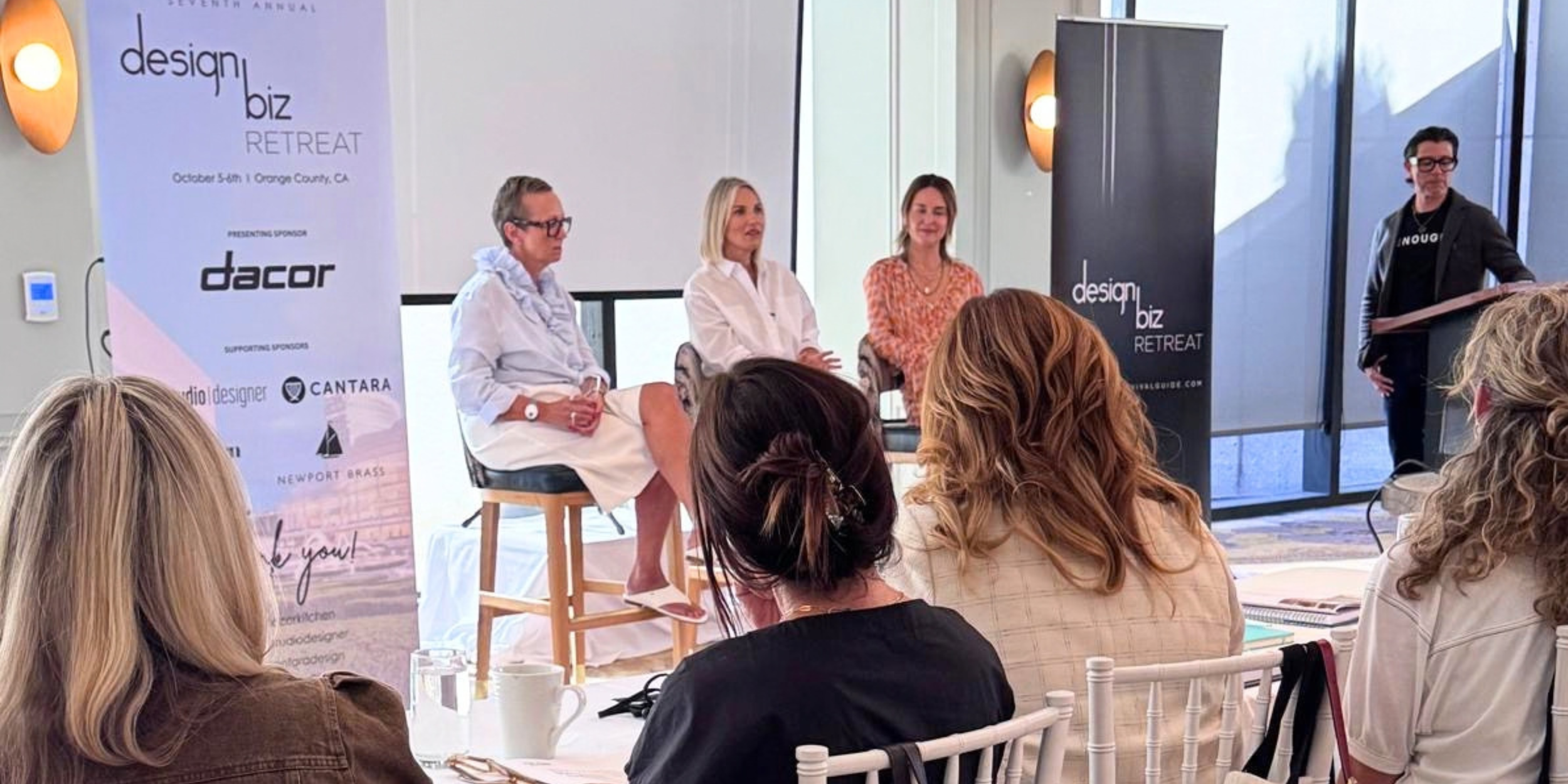
Later that afternoon, I joined Brooke Wagner and Rachel Morrison on the mentor panel. We covered all sorts of familiar business challenges. Hiring, processes, managing projects at a distance, and the practical realities of running an interior design practice.
But I found myself returning to something that has become increasingly central to the way I think about design. Emotion. We spend a lot of time discussing systems, processes, design styles, materiality and brand positioning. All important. But I think sometimes we forget to ask the most fundamental question.
What does what we do actually mean to the people experiencing it? For me, interior design has always been about much more than how a space looks. It’s about home. And home is an extraordinarily powerful thing. It’s where we retreat. Where we feel safe. Where we recover, celebrate, grieve, laugh, love and live the most personal parts of our lives.
A home should be a sanctuary. It should understand something about the people who inhabit it and give them an emotional experience that goes far beyond its aesthetic appearance.That’s what I believe great interior design can do.But increasingly, I’ve come to believe that we should apply exactly the same thinking to the businesses delivering those homes.
We talk endlessly about the client experience. What about the experience of the person running the business? What about the employees, the contractors, the collaborators and the people whose lives are affected by the demands we place upon them?
What happens when the process of delivering a beautiful home leaves the people responsible for it exhausted, overwhelmed and emotionally depleted? What have we actually achieved? We should be creating extraordinary homes in which our clients can lead fulfilled, nourished lives.
But surely we should be able to do that whilst creating businesses in which we can lead fulfilled, nourished lives too. I don’t think those ambitions should be mutually exclusive. In fact, I think they belong together.
The cost of business should never be you:
I have spent much of my professional life believing that hard work, determination and resilience would carry me through almost anything. And to a large extent, they have. But I also know what relentless stress feels like. I believe it has taken a toll on my own wellbeing, although I can’t know what role, if any, it played in my illness.
What I do know is that I no longer believe exhaustion should be a badge of honour. Nor do I believe that sacrificing your relationships, your health, your peace of mind or your ability to enjoy your life is an acceptable price for running a successful business.
We can be ambitious without being consumed. We can deliver exceptional service without sacrificing every boundary. We can build profitable businesses without believing that every waking moment must belong to them.
And we can create businesses that are thoughtful, generous and kind, whilst expecting the people we work with to bring those same values to the relationship.Clients included.
There will always be difficult days. Running a business is not supposed to be effortless.But there is a difference between accepting the responsibilities of business ownership and allowing those responsibilities to consume the person you are.
There is a cost to running a business. But that cost should never be you.
What I brought home from California:

I travelled to Costa Mesa expecting two days of conversations about visibility and impact.And there were plenty.
We talked about storytelling, AI, photography, branding, financial planning, human behaviour and the practical realities of running design businesses. But the thing I’ll remember most is the humanity of it all.
The generosity of the speakers. The honesty of the conversations. The kindness of the people I met. And the recognition that, despite being on opposite sides of the Atlantic, the challenges we face as business owners are remarkably similar.
I came away reminded of why I created The Business of Interiors in the first place. Because we need more than advice on how to build successful businesses.
We need conversations about what success actually means. We need people who will challenge us, encourage us, tell us the truth and remind us that there is a whole life happening outside the businesses we run.
And we need to make space for that life. So thank you, Rick Campos, for creating a room in which those conversations could happen. Thank you to Jude Charles, Robyn White, Ava and Brittany of Girls at Flourish, Dan Costigan, Amber Diller-Garza, Brooke Wagner and Rachel Morrison for bringing such different perspectives to the same conversation.
And thank you to Newport Brass and Dacor for their hospitality, and to Studio Designer, Cantata and DesignFiles for supporting the retreat. Sponsors make gatherings like this possible, creating the space for people to learn, connect and share honestly.
Thank you, too, to every designer who was willing to share a little of themselves over those two days. You reminded me that visibility isn’t simply about being seen by more people. Sometimes it’s about making sure we’re still visible to the people who matter most.
Including ourselves.And perhaps, when we think about impact, we should ask not only what we’re building, but what kind of life we’re leaving room to live.
Because surely, that is what all of this is for.
Rachel Usher is the founder of Usher & Co Interior Design and The Business of Interiors, providing business advisory, education and industry conversations for interior design professionals.